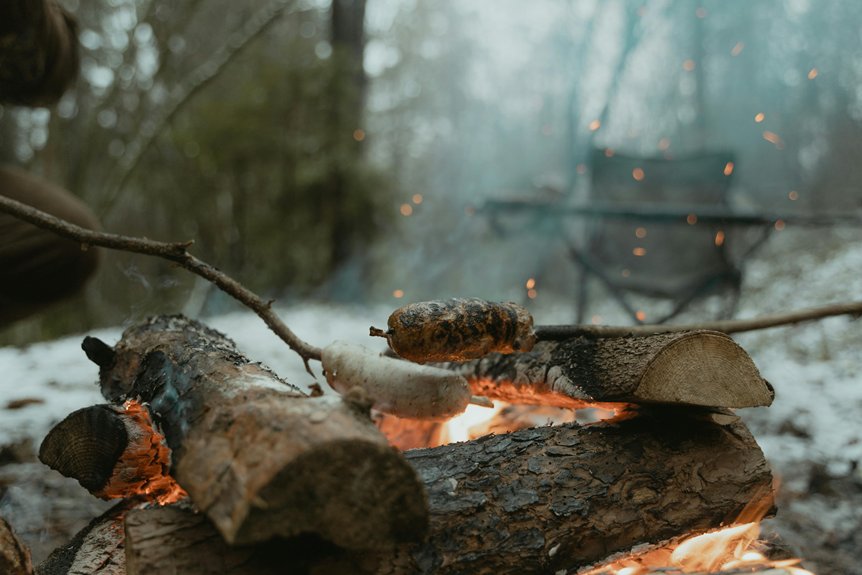
Winter camping can be a rewarding experience, but staying warm is essential for your safety and comfort. Choosing the right gear and employing effective layering techniques can make all the difference. It’s not just about what you wear; how you set up your sleeping area and cook your meals plays a significant role, too. Let’s explore these strategies to guarantee you stay cozy even in the harshest conditions.
Choosing the Right Winter Gear
When you’re gearing up for a winter camping trip, choosing the right gear is essential to staying warm and comfortable.
Start with a high-quality, insulated sleeping bag rated for low temperatures. A well-insulated tent is also important; look for one designed to withstand snow and wind. Don’t forget about a sleeping pad, which adds an extra layer of insulation from the cold ground.
For clothing, invest in moisture-wicking base layers, an insulating mid-layer, and a waterproof outer layer. Insulated gloves, warm hats, and thermal socks are crucial accessories.
Finally, consider a reliable, insulated water bottle to prevent freezing. By selecting the right gear, you’ll set yourself up for a cozy and enjoyable winter camping adventure.
Layering Techniques for Maximum Warmth
To stay warm while winter camping, mastering layering techniques is key. Start with a moisture-wicking base layer that fits snugly against your skin. This layer keeps sweat away, preventing chills.
Next, add an insulating mid-layer, like fleece or down, to trap body heat. Make certain this layer allows for easy movement.
Finally, top it off with a waterproof and windproof outer layer to shield against the elements.
Don’t forget to layer your extremities! Wear moisture-wicking socks, insulated gloves, and a warm hat, as a significant amount of heat escapes from your head.
Adjust your layers based on activity level; you can shed or add layers as needed to maintain comfort.
With the right layering, you’ll stay warm and enjoy your winter camping adventure.
Insulating Your Sleeping Setup
While a well-insulated sleeping setup is essential for a comfortable night in the cold, it’s not just about the sleeping bag.
Start with a good sleeping pad; it acts as a barrier between you and the frozen ground, preventing heat loss. Opt for a pad with a high R-value for maximum insulation.
Layer your sleeping bag with a liner or use two bags if necessary, especially on frigid nights. Remember to keep your gear dry; moisture can sap your warmth quickly.
You can also use extra clothing or blankets as insulation. Finally, consider a tent that minimizes drafts.
Preparing and Cooking Food to Stay Warm
Cooking warm meals while winter camping not only nourishes your body but also provides a much-needed morale boost in the cold wilderness.
Start by planning meals that are easy to prepare and high in calories to keep your energy up. Pre-pack your ingredients in zip-lock bags to save space and reduce prep time. Opt for quick-cooking options like instant oatmeal, dehydrated soups, or pasta—these will warm you up in no time.
Always bring a reliable stove and sufficient fuel to guarantee consistent cooking. Remember to enjoy your meals in a cozy spot, away from the wind.
Eating together can elevate everyone’s spirits, so consider communal cooking to enhance camaraderie and warmth around your camp.
Utilizing Heat Sources Effectively
When you’re braving the winter chill, effectively utilizing heat sources can make a significant difference in your comfort level.
Start by layering your clothing to trap heat, and don’t forget to wear a hat and gloves, as much of your body heat escapes from your head and extremities.
Use your camp stove for cooking and boiling water; the steam can help warm your space.
Position your sleeping bag with a heat source nearby, like a hot water bottle, to keep you cozy through the night.
Consider portable propane heaters, but make certain you have proper ventilation to prevent carbon monoxide buildup.
Finally, gather around a fire for warmth and camaraderie, but always prioritize safety.
Enjoy the warmth and the beauty of winter!
Recognizing and Preventing Hypothermia
Even with the right heat sources, it’s essential to stay vigilant about the risks of hypothermia while winter camping.
Hypothermia occurs when your body loses heat faster than it can produce it, leading to dangerously low body temperatures. Watch for early signs like shivering, confusion, and fatigue. If you or a friend experiences these symptoms, act quickly: move to a warmer area, change into dry clothes, and consume warm, non-alcoholic beverages.
To prevent hypothermia, layer your clothing, stay dry, and guarantee your sleeping bag is rated for cold temperatures. Regularly check in with your group; communication is key.