When you’re gearing up for a camping trip, knowing what to pack can make all the difference. From sturdy tents to cozy sleeping bags, each item plays an essential role in your comfort and safety. Don’t forget the essentials like cooking supplies and personal hygiene products. As you plan, consider how to balance convenience with environmental care. Let’s explore the must-have gear that’ll guarantee your outdoor adventure is both enjoyable and responsible.
Essential Camping Gear
When you head out into the wilderness, packing the right essential camping gear can make or break your experience.
Start with a durable backpack to carry your essentials comfortably. A reliable first aid kit is a must; you never know when you might need it. Don’t forget a multi-tool for various tasks, from food prep to gear repair.
A portable water filter or purification tablets will keep you hydrated safely. Pack a compact cooking system and lightweight pots for meals, along with non-perishable food.
A headlamp or flashlight guarantees you can navigate after dark. Finally, bring a good map and compass; technology can fail, but these tools won’t.
With the right gear, you’ll be ready for anything nature throws your way!
Shelter and Sleeping Arrangements
Choosing the right shelter and sleeping arrangements can greatly enhance your camping experience, ensuring you stay comfortable and protected from the elements.
First, select a tent that suits your needs—consider size, weight, and weather resistance. A three-season tent is often a great choice for various conditions. If you prefer a more rustic experience, a hammock with a rainfly can be a cozy alternative.
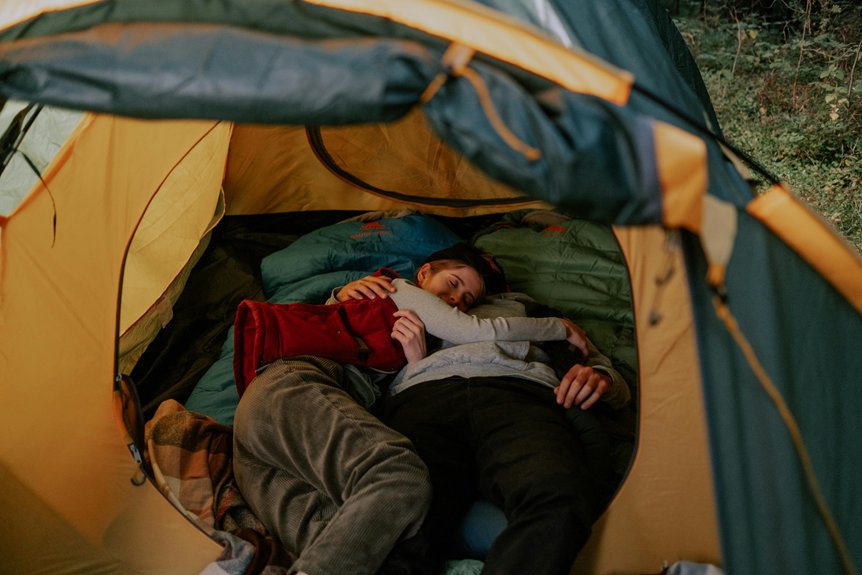
For sleeping, don’t skimp on a quality sleeping bag rated for the temperatures you’ll encounter. A sleeping pad adds insulation and cushioning, making your nights more restful. Bring a pillow or stuff clothes in a bag for added comfort.
Finally, consider a tarp for extra protection against rain, and always stake your shelter securely to withstand wind. Happy camping!
Cooking Supplies and Food Storage
Once you’ve set up your shelter and sleeping arrangements, it’s time to think about how you’ll prepare and store your food. Start with a portable stove or grill—make sure to pack fuel if needed.
Don’t forget a sturdy pot or pan for cooking and a spatula for flipping. A multi-tool can be invaluable for cutting and opening cans.
For food storage, opt for airtight containers to keep your ingredients fresh and prevent critters from getting into your supplies. Consider using a cooler for perishables, and always bring a trash bag to keep your campsite clean.
Remember to pack utensils, plates, and cups, and bring plenty of water for cooking and drinking. With these essentials, you’ll be ready to enjoy delicious meals under the stars!
Clothing and Footwear
Packing the right clothing and footwear can make or break your camping experience. Start with moisture-wicking base layers to keep you dry, and bring insulating layers for warmth, especially at night. A waterproof jacket is essential for unexpected rain, while breathable pants can keep you comfortable during hikes.
Don’t forget a hat for sun protection and a beanie for chilly evenings.
Footwear is equally important. Choose sturdy, comfortable hiking boots that provide good ankle support and traction. If you plan on relaxing by the campsite, pack a pair of camp shoes or sandals for downtime.
Remember to bring enough pairs of socks, ideally made of wool or synthetic materials, to keep your feet dry and comfortable. Happy camping!
Personal Hygiene Items
While enjoying the great outdoors, it’s easy to overlook personal hygiene, but maintaining cleanliness is essential for your comfort and health during camping trips.
Start with biodegradable soap, which helps you clean dishes and yourself without harming the environment. Bring a quick-dry towel for drying off after washing or swimming. Don’t forget toothbrushes, toothpaste, and floss to keep your mouth fresh. Pack deodorant to stay odor-free, especially if you’re active.
Consider facial wipes or hand sanitizer for quick cleanups when water isn’t available. A compact mirror and nail clippers can also be handy.
Finally, include toilet paper and a small trowel for digging a cat hole, ensuring you leave no trace. Stay clean, and enjoy your adventure!
First Aid Kit and Safety Gear
Keeping yourself clean and healthy is just the start of preparing for a camping trip; safety should be high on your list too. A well-stocked first aid kit is essential. Pack adhesive bandages, antiseptic wipes, gauze, and adhesive tape for treating minor cuts and scrapes.
Don’t forget pain relievers like ibuprofen or aspirin, as well as any personal medications you might need.
For safety gear, consider a flashlight with extra batteries and a whistle for emergencies. A multi-tool can be incredibly handy for various tasks. If you’re in bear country, bear spray is a smart addition.
Finally, familiarize yourself with basic first aid techniques; knowing how to respond can make all the difference when accidents happen. Prioritize safety, and enjoy your adventure!
Navigation and Communication Tools
Maneuvering the great outdoors can be a thrilling adventure, but having the right tools for direction and communication is essential. Start with a reliable map and compass; these classic tools don’t run out of battery and can guide you through unfamiliar terrain.
A GPS device can also be invaluable, providing accurate positioning and tracking. Don’t forget a fully charged smartphone equipped with offline maps, but always have a backup plan, as signal strength can vary.
For communication, a portable two-way radio or satellite phone can keep you connected in remote areas.
Finally, consider a whistle; it’s lightweight and can be a lifesaver in emergencies. Equip yourself with these navigation and communication tools, and you’ll enjoy your camping experience with confidence.
Lighting and Power Sources
When you’re out in the wilderness, having proper lighting and power sources can make all the difference in your camping experience. A reliable headlamp or flashlight is essential for finding your way at night, while lanterns provide ambient light for your campsite.
Opt for LED options, as they’re energy-efficient and long-lasting. Don’t forget extra batteries or a portable charger; you’ll want to keep your devices powered for emergencies or guidance.
Solar chargers can be a great eco-friendly choice, soaking up sunlight during the day to keep your gear ready. If you’re planning a longer trip, consider a power bank for additional energy.
With the right lighting and power sources, you’ll stay safe and comfortable, making your camping adventure even more enjoyable.
Entertainment and Leisure Activities
After ensuring you have the right lighting and power sources, it’s time to think about how to make your camping trip enjoyable in the great outdoors.
Start by packing games like cards or board games for some friendly competition around the campfire. Don’t forget a good book or two for those quiet moments.
If you’re traveling with kids, consider outdoor activities like scavenger hunts or nature walks to keep them engaged.
Bringing along a portable speaker can set the mood for evenings under the stars with your favorite tunes.
Finally, a journal can be a great way to document your adventures.
Embrace the opportunity to unwind, connect with nature, and enjoy quality time with friends and family!
Environmental Considerations and Waste Management
While you’re enjoying the beauty of nature, it’s essential to reflect on how your camping trip impacts the environment. Start by following the Leave No Trace principles—pack out what you pack in. This means disposing of your trash responsibly and avoiding littering.
Bring reusable containers for food and drinks to minimize waste, and opt for biodegradable soaps and detergents to protect local ecosystems.
When it comes to human waste, use designated toilet facilities whenever possible. If you’re in a remote area, dig a hole at least 200 feet from water sources and bury waste properly.
Finally, respect wildlife by keeping food secured and avoiding feeding animals. By taking these steps, you’ll help preserve nature for future campers to enjoy.