Imagine setting up camp near a beautiful lake, only to find out too late that it’s a bear’s feeding ground. To avoid such scenarios, understanding safety rules is vital for every adventurer. From choosing the right campsite to practicing fire safety, there are essential guidelines you need to follow. What other precautions should you consider to guarantee a safe and enjoyable camping experience?
Understanding Local Wildlife and Their Habitats
When you venture into the great outdoors, understanding local wildlife and their habitats is essential for your safety and enjoyment. Familiarize yourself with the animals in the area—know which ones are harmless and which ones can pose risks.
Research the habits of local creatures, such as bears, snakes, or even insects, and learn how to avoid encounters. Always store food properly to prevent attracting wildlife to your campsite. Respect their habitats by keeping a safe distance and never feeding them. This protects both you and the animals.
Being aware of seasonal changes in wildlife behavior, like mating or hibernation, can also help you stay safe. By respecting these creatures and their environments, you’ll guarantee a more enjoyable outdoor experience.
Essential Fire Safety Practices
After understanding local wildlife and their habitats, it’s important to focus on fire safety while camping.
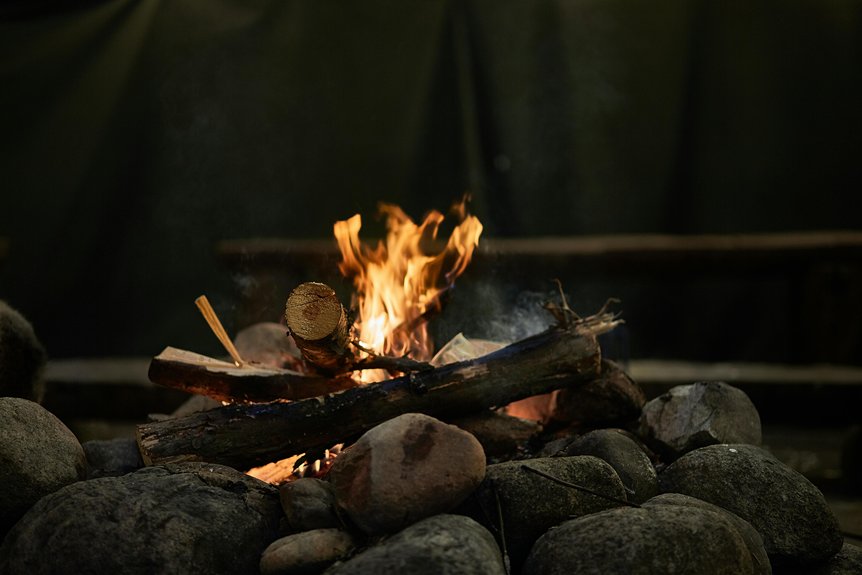
Always set up your campfire in a designated fire ring or a clear area, away from overhanging branches and dry grass. Before lighting a fire, check local regulations and fire bans. Use only dry, seasoned wood and never leave your fire unattended.
Keep water or a shovel handy to extinguish the fire in case of emergencies. When you’re done, verify the fire is completely out by dousing it with water, stirring the ashes, and feeling for heat.
Selecting a Safe Campsite
Choosing a safe campsite is essential for a successful outdoor experience, especially since the right location can protect you from potential hazards.
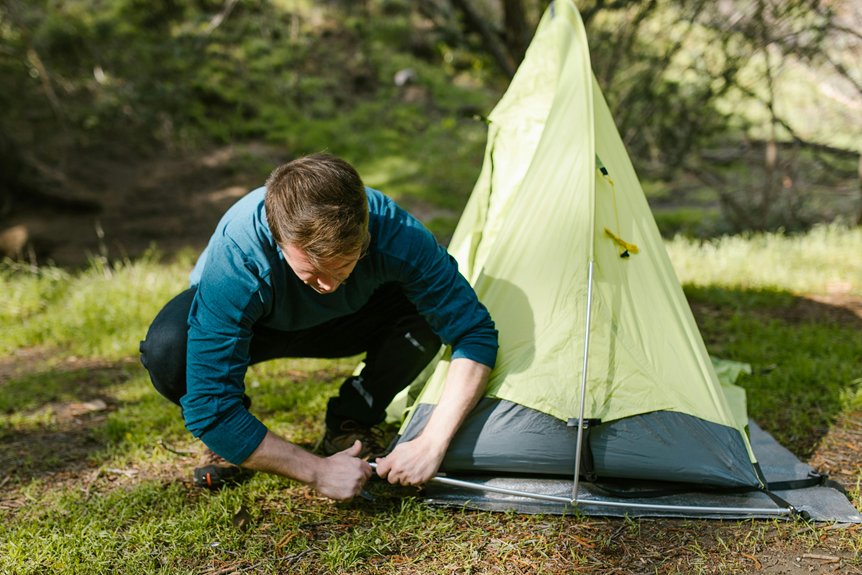
Look for flat ground, away from cliffs and unstable terrain, to avoid accidents. Set up your tent at least 200 feet from water sources to minimize contamination risks and protect wildlife habitats. Avoid camping under dead trees or branches, as they can fall unexpectedly.
Pay attention to the wind direction; a sheltered spot can keep you comfortable. Also, consider the proximity to trails and emergency access points.
Finally, check for local regulations or warnings about wildlife in the area. By following these guidelines, you’ll guarantee a safer and more enjoyable camping adventure.
First Aid and Emergency Preparedness
While enjoying the great outdoors, being prepared for emergencies can make all the difference in ensuring your safety and that of your fellow campers.
Start by packing a well-stocked first aid kit, including bandages, antiseptic wipes, pain relievers, and any personal medications. Familiarize yourself with basic first aid techniques, such as CPR and treating common injuries like cuts or sprains.
Always have a communication plan in place—know how to reach emergency services and keep a charged phone handy. Ultimately, consider taking a wilderness first aid course to boost your confidence and skills.
Proper Food Storage and Wildlife Prevention
To keep your food safe and prevent wildlife encounters, it’s vital to store your provisions properly.
Always use bear-proof containers or hang your food at least 10 feet off the ground and 4 feet away from tree trunks. Keep your cooking area clean, and dispose of scraps in designated trash bins or bear-proof containers.
Seal all food in airtight bags to minimize odors, as even small scents can attract animals. Avoid cooking near your sleeping area; set up a separate cooking station at least 200 feet away.
When you leave your campsite, take all leftovers with you.
Staying Hydrated and Managing Weather Conditions
Staying hydrated is essential for your overall well-being while camping, especially when weather conditions can vary dramatically. Always carry enough water and drink regularly, even if you don’t feel thirsty. In hot conditions, aim for at least two liters a day, and consider electrolyte solutions to replenish lost minerals.
When temperatures drop, manage your hydration carefully; dry air can lead to dehydration, so keep sipping water.
Monitor weather forecasts to prepare for sudden changes. Dress in layers to adapt easily, and pack waterproof gear for unexpected rain. If conditions become severe, seek shelter and stay safe.