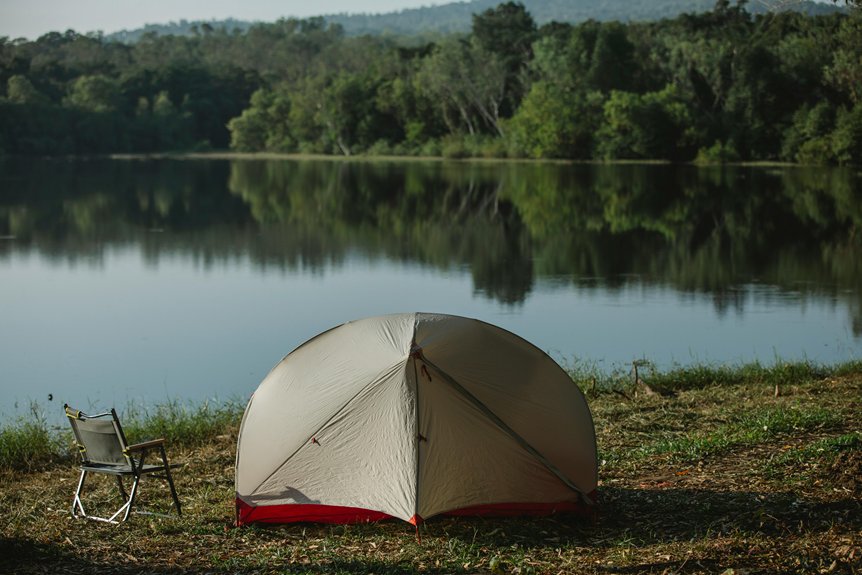
Imagine you’re camping in the woods when a sudden downpour hits. Your tent, though sturdy, starts to leak, leaving you soaked and uncomfortable. To avoid this scenario, you need to know how to waterproof your tent effectively. By following some straightforward steps, you can guarantee your gear stays dry and reliable. Let’s explore the best techniques to keep your tent in top shape, so you can focus on enjoying the great outdoors.
Understand the Importance of Waterproofing
When you’re out in the wild, staying dry is essential for a comfortable camping experience, which is why understanding the importance of waterproofing your tent can’t be overstated.
Rain can sneak up on you, turning your cozy shelter into a soggy mess if you’re unprepared. Waterproofing protects not just your tent fabric but also your gear and sleeping bags, guaranteeing everything stays dry and comfortable.
Plus, it extends your tent’s lifespan, saving you money in the long run. Knowing how to effectively waterproof your tent gives you the confidence to face unpredictable weather.
Choose the Right Tent Material
Choosing the right tent material is a key factor in ensuring your camping experience remains dry and enjoyable.
Look for tents made from synthetic fabrics like nylon or polyester, as they’re typically water-resistant and lightweight. If you opt for cotton canvas, know that it’s breathable and durable but can absorb water, so it may not be ideal for heavy rain.
Pay attention to the denier rating; higher numbers indicate a stronger material. Additionally, check for a waterproof coating or treatment, like polyurethane or silicone.
A good tent floor should be made of a thicker material to prevent water seepage. By selecting the appropriate tent material, you set the foundation for a comfortable, dry adventure.
Inspect and Repair Existing Damage
Before heading out on your camping trip, it’s vital to inspect your tent for any existing damage that could compromise its waterproof capabilities.
Start by checking the fabric for holes, tears, or frayed seams. Pay close attention to the corners and areas that experience stress during setup. If you find any damage, use a tent repair kit to patch small holes or tears.
For seam issues, consider applying seam sealer to guarantee water won’t leak through. Don’t forget to inspect the zippers and guy lines, as these can also affect your tent’s overall integrity.
Clean Your Tent Before Waterproofing
To guarantee your waterproofing efforts are effective, it’s essential to clean your tent thoroughly.
Start by setting up your tent in a dry area, so you can inspect it closely. Remove any dirt, mud, or debris using a soft brush or cloth. For stubborn stains, mix a gentle soap with water and scrub lightly.
Avoid harsh chemicals, as they can damage the tent fabric. Rinse the tent well with clean water to remove any soap residue.
Make certain to dry the tent completely before packing it away, as moisture can lead to mold and mildew.
Use a High-Quality Waterproofing Spray
Once you’ve cleaned your tent, it’s time to apply a high-quality waterproofing spray to augment its protective capabilities.
Choose a spray specifically designed for tents, as these products create a durable barrier against moisture.
Before you start, make certain you’re in a well-ventilated area to avoid inhaling fumes.
Shake the can thoroughly and hold it about 6-12 inches away from the fabric.
Spray evenly, focusing on seams and areas that face the elements most.
Allow the spray to dry completely, usually a few hours, before packing your tent away.
This step not only prolongs the life of your tent but also keeps you dry during unexpected downpours.
With proper application, you’ll be ready for your next adventure, rain or shine!
Apply a Seam Sealer for Extra Protection
After applying a waterproofing spray, it’s wise to take an extra step by sealing the seams of your tent.
Seams are often the weakest points where water can sneak in, so using a seam sealer can make a significant difference in keeping you dry.
Start by cleaning the seams with a damp cloth to remove dirt and debris.
Once they’re clean, apply the seam sealer following the manufacturer’s instructions, ensuring you cover every stitch and corner.
Use a small brush or your finger to spread it evenly.
Allow it to dry completely before your next camping trip.
This simple, effective process adds an extra layer of protection, ensuring you stay cozy and dry, no matter the weather.
Properly Store Your Tent When Not in Use
Properly storing your tent when it’s not in use can greatly extend its lifespan and maintain its waterproof qualities.
Start by verifying the tent is completely dry to prevent mold growth. After that, fold it neatly to avoid creases that can weaken the fabric over time.
Use a breathable storage sack instead of a compressed one; this helps the material retain its integrity. Keep your tent in a cool, dry place, away from direct sunlight, which can degrade the fabric. Avoid storing it in a damp basement or garage.
Regularly check on your tent during storage to verify it remains in good shape. Following these steps will keep your tent ready for your next adventure, rain or shine!
Set Up Your Tent in a Water-Resistant Manner
Even the best waterproof tents can fall short if not set up correctly. To maximize your tent’s water resistance, choose a flat, elevated spot away from potential puddles. Clear away any debris like rocks or branches that could damage your tent’s floor.
When pitching, make certain the tent’s door faces away from the wind, preventing rain from blowing inside. Use a tarp or footprint underneath your tent for added protection against moisture. Ensure your rainfly is securely attached and taut to avoid sagging, which can collect water.
Finally, stake down your tent firmly, as this keeps it stable against strong winds and helps maintain its structure. With the right setup, you’ll stay dry and comfortable during your adventures.
Regular Maintenance Tips for Long-Lasting Waterproofing
To guarantee your tent remains waterproof over time, it’s crucial to incorporate regular maintenance into your camping routine.
Start by cleaning the tent after each trip; use mild soap and water to remove dirt and grime, which can damage the waterproof coating. Make sure to dry it completely before packing to prevent mold and mildew.
Inspect the seams regularly for signs of wear or leaks. If you spot any damage, apply seam sealer immediately.
Reapply a waterproofing treatment every one to three years, depending on usage.
Finally, store your tent in a cool, dry place, avoiding prolonged exposure to sunlight.