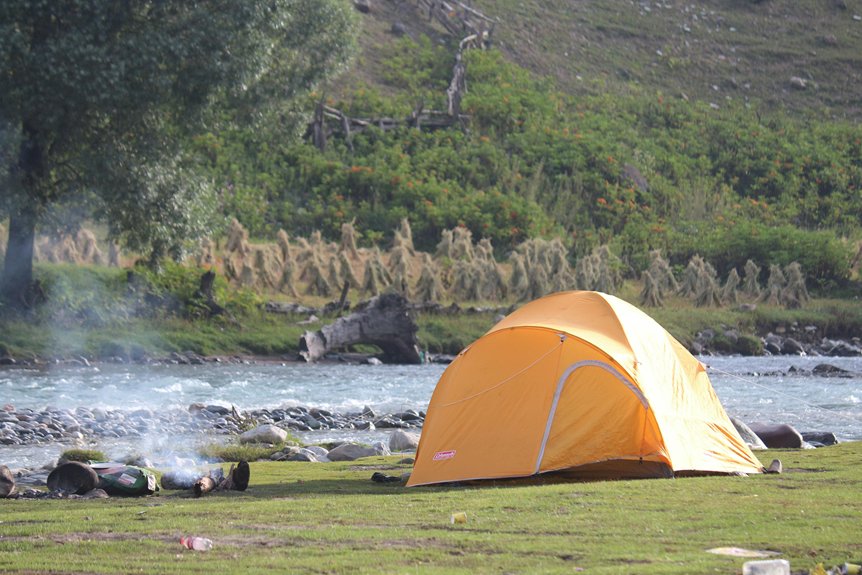
Washing a tent can feel challenging, especially when you want to preserve its waterproof coating. It’s vital to approach the task with care to avoid damaging the materials. Knowing the right methods and products can make a significant difference. Let’s explore the steps and tips to guarantee your tent stays clean and functional, so you can enjoy your outdoor adventures without worry. What’s the first step in this essential process?
Understanding Tent Materials and Waterproof Coatings
When you’re getting ready to wash your tent, it’s important to understand the materials and waterproof coatings that make up its structure.
Most tents are made from nylon or polyester, which are lightweight yet durable. These fabrics often have a polyurethane or silicone waterproof coating that keeps you dry during your adventures. Knowing this helps you choose the right cleaning method.
Avoid harsh detergents or bleach, as they can strip away these protective layers. Instead, use a gentle soap and lukewarm water.
Always check care instructions specific to your tent model, as different brands may have unique requirements. Proper care guarantees your tent lasts longer and remains effective at keeping moisture out during your next camping trip.
When to Wash Your Tent
Are you unsure about the best timing for washing your tent? Knowing when to wash it can extend its lifespan and maintain its waterproof coating.
Ideally, you should clean your tent after every camping trip, especially if it’s dirty or has mold. Look for signs like stains, odors, or visible dirt. If you’ve encountered rain or snow, washing is essential to prevent mildew.
However, avoid washing your tent too frequently, as excessive cleaning can wear down its protective layers. If you’re storing your tent for an extended period, a good wash before storage can prevent buildup and keep it fresh.
Preparing for the Washing Process
Before diving into the washing process, it’s crucial to gather the right materials and set the stage for effective cleaning. Start by finding a large, flat area, ideally outdoors, where you can spread out your tent.
You’ll need a soft brush, sponge, and a bucket for your cleaning solutions. Choose a mild soap that’s safe for fabrics—avoid bleach or harsh detergents.
Next, check your tent for any damages or areas that need repairs; you don’t want to wash a damaged tent. Remove all gear and stakes, and make sure the zippers and openings are closed to prevent water from entering.
Finally, read the care instructions on your tent to avoid any mishaps during the washing process.
The Best Cleaning Solutions for Your Tent
Choosing the right cleaning solution for your tent can make a significant difference in its longevity and performance.
Look for gentle, non-toxic detergents specifically designed for outdoor gear. Avoid harsh chemicals, bleach, or fabric softeners, as they can damage the waterproof coating.
You might consider using a mixture of mild soap and water, which effectively removes dirt without compromising the material. Additionally, products made for cleaning and maintaining outdoor fabrics can be a great choice, offering both cleaning and protective properties.
Always check the manufacturer’s recommendations before selecting a cleaner.
With the right solution, you can keep your tent in top shape, ensuring it stays functional and ready for your next adventure.
Hand Washing vs. Machine Washing
When it comes to washing your tent, the method you choose—hand washing or machine washing—can impact its condition.
Hand washing is often the safest option. It allows you to control the process, ensuring that you don’t damage the fabric or waterproof coating. You can gently scrub away dirt while being mindful of any fragile areas.
On the other hand, machine washing can be convenient but carries risks. The agitation may stress seams and coatings, potentially leading to leaks. If you choose this route, use a front-loading machine and a gentle cycle, but always check your tent’s care instructions first.
Ultimately, your choice will depend on how dirty your tent is and how comfortable you’re with the risks involved.
The Proper Washing Technique
To wash your tent effectively, start by setting up a clean, spacious area where you can lay it out flat.
Use a gentle, non-detergent soap specifically designed for outdoor gear. Grab a soft sponge or cloth and dip it into the soapy water. Gently scrub the tent’s surface, focusing on any dirty or stained areas.
Avoid using brushes or harsh scrubbers, as they can damage the fabric and waterproof coating. Pay extra attention to zippers and seams, where dirt often collects.
If your tent has a rainfly, clean it separately to guarantee you reach all areas. Always follow the manufacturer’s care instructions, as they provide important guidelines tailored to your tent’s material.
This careful approach helps maintain its waterproof integrity.
Rinsing Your Tent Thoroughly
After you’ve gently scrubbed away dirt and grime, rinsing your tent thoroughly is the next essential step. This guarantees that any remaining soap or residues are completely removed, which is critical for maintaining the waterproof coating.
Start by setting up your tent in a well-ventilated area or using a garden hose if you can’t pitch it. Use a gentle spray to wash away soap, working from the top down to avoid trapping dirt in crevices.
Pay special attention to seams and zippers, as these areas often collect soap. Rinse until the water runs clear, indicating all soap is gone.
Taking your time during this step will keep your tent in great shape for many adventures to come.
Drying Your Tent Correctly
Properly drying your tent is essential for preventing mold and mildew.
After rinsing, shake off excess water and set up your tent in a well-ventilated area. If possible, pitch it outside in the shade to avoid direct sunlight, which can damage the fabric and waterproof coating.
Make sure to open all doors and windows to increase airflow. If the weather isn’t cooperating, you can hang your tent indoors, using a clothesline or a spacious room.
Always guarantee it’s completely dry before packing it away. Even small damp spots can lead to issues later on.
Taking these steps will help maintain your tent’s integrity and longevity, so you can enjoy many more adventures ahead.
Reapplying Waterproof Coating
Once your tent is dry, it’s time to focus on reapplying the waterproof coating. Start by selecting a high-quality waterproofing spray specifically designed for tents.
Make certain you’re in a well-ventilated area, ideally outdoors. Shake the spray can thoroughly before applying it evenly across the tent’s exterior, paying special attention to seams and areas prone to leaks.
Hold the can about 6-8 inches away to guarantee an even coat. Allow the first layer to dry completely before applying a second coat for best protection.
After reapplying, let the tent cure for at least 24 hours in a dry environment. This process helps restore the tent’s water resistance, keeping you dry on your next adventure!
Storing Your Tent After Cleaning
When you finish cleaning your tent, you need to store it properly to maintain its condition and longevity.
First, guarantee the tent is completely dry to prevent mold and mildew. Fold it neatly, avoiding tight creases that can stress the fabric.
Consider using a breathable storage bag rather than the original stuff sack, which can trap moisture. Store it in a cool, dry place, away from direct sunlight to protect the material from UV damage.
Avoid keeping it in a damp basement or hot attic, as temperature fluctuations can harm its integrity.
Regularly check on your stored tent, guaranteeing it remains dry and in good condition, so it’s ready for your next adventure!