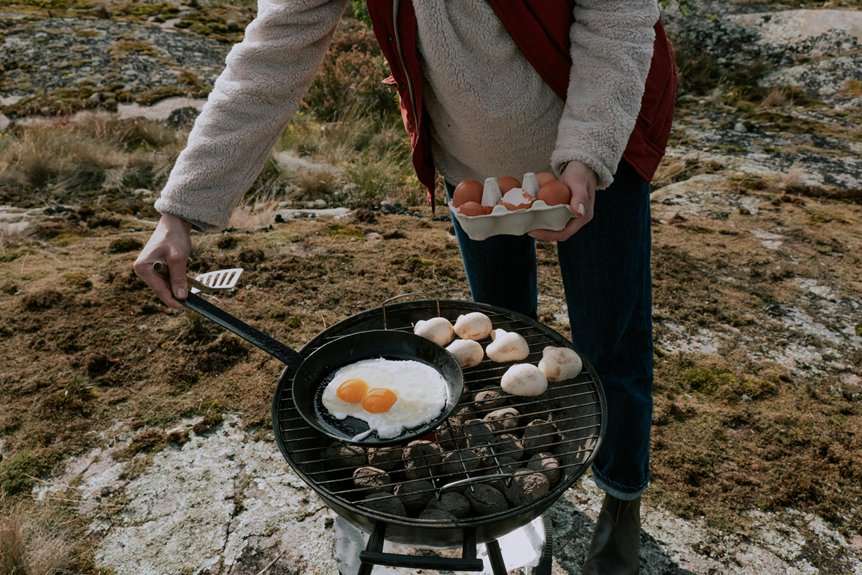
Did you know that nearly 30% of eggs can crack during transport if not packed properly? When you’re heading out for a camping trip, ensuring your eggs make it intact is essential for delicious meals. With the right techniques, you can protect these fragile food items from bumps and temperature changes. So what’s the best way to safeguard your eggs while enjoying the great outdoors? Let’s explore effective packing strategies.
Choosing the Right Container
When it comes to packing eggs for camping, choosing the right container is essential. You’ll want something sturdy that protects against bumps and jostles during travel.
Hard plastic containers are often your best bet; they’re lightweight yet durable, keeping your eggs safe from breakage. Look for options with secure lids to prevent accidental openings.
If you’re feeling creative, consider using a small cooler lined with a soft cloth for extra cushioning. Avoid glass containers, as they’re too fragile and can shatter.
Don’t forget to label your container clearly so you can easily find your eggs in the cooler. With the right container, you can enjoy fresh eggs during your camping adventure without the worry of messy spills!
Using Egg Cartons
Although you might think of traditional egg cartons as a simple storage solution, they can be incredibly effective for camping trips. When you hit the road, using a standard egg carton helps keep your eggs stable and cushioned.
The structure of the carton cradles each egg, preventing them from jostling against one another during transit. Make sure to choose a sturdy cardboard or plastic carton, as they provide better protection against bumps and drops.
To maximize space, you can even nestle smaller items, like spices or condiments, within the carton. Just remember to pack the carton in a secure spot in your cooler or backpack to minimize movement.
With this simple tool, you’ll keep your eggs safe and ready for a delicious camp breakfast!
Wrapping Individual Eggs
Wrapping individual eggs adds an extra layer of protection for your camping trip, ensuring each one arrives intact.
Start by using a small piece of bubble wrap or a soft cloth. Place the egg in the center, then fold the material around it, making sure to cover all sides. Secure the wrap with a piece of tape or a rubber band, but not too tight—avoid cracking the shell.
You can also use lightweight paper towels as an alternative if you don’t have bubble wrap handy. Once wrapped, store each egg in a sturdy container or egg carton, keeping them separate to reduce the risk of breakage.
This method not only protects them but also makes packing and unpacking a breeze!
Packing With Soft Materials
After wrapping individual eggs for added protection, consider using soft materials to cushion them further during transport. Packing peanuts, bubble wrap, or even crumpled paper towels can create a protective layer around your eggs, minimizing the risk of breakage.
Place a layer of these materials at the bottom of your container, and then nestle the wrapped eggs on top. Fill any gaps with more soft materials to prevent movement.
If you have a small cooler, soft cloths or dish towels work great as additional padding. Remember, the goal is to absorb shocks and distribute pressure evenly, so don’t skimp on cushioning.
When you arrive at your campsite, you’ll be glad you took the extra steps to keep your eggs safe!
Keeping Eggs Cool
To guarantee your eggs stay fresh and safe during your camping trip, keeping them cool is vital. Start by packing your eggs in an insulated cooler with ice packs or frozen gel packs. This helps maintain a stable, cool temperature, which is important for preventing spoilage.
Whenever you open the cooler, try to limit the time it’s exposed to warm air. If you’re camping in warmer weather, consider wrapping your egg containers in a damp cloth to provide added insulation. You can even place them in a shaded area out of direct sunlight.
Storing Eggs Safely
Once you’ve got your eggs cooled and packed, it’s time to focus on storing them safely during your camping trip.
Keep your eggs in a sturdy container, ideally one designed for egg transport. This’ll cushion them against bumps and jolts while you’re on the move.
Place the container in a cool, shaded spot away from direct sunlight and heat sources, as temperature fluctuations can affect their freshness.
If you’re using a cooler, pack the eggs on top of ice packs, but make sure they’re not submerged in water.
Finally, avoid stacking heavy items on top of the egg container to prevent any accidental cracks.
Preparing Eggs Before the Trip
Preparing eggs before your camping trip is essential for ensuring they stay fresh and safe to eat. First, check the expiration date and discard any eggs that are past their prime.
To minimize breakage, consider cracking the eggs into a clean, sealable container. This way, you can easily pour out the amount you need for meals. If you prefer whole eggs, gently wrap each one in a paper towel for extra cushioning and then place them in a sturdy container.
Don’t forget to refrigerate them until it’s time to leave. Finally, try to plan your meals around when you’ll use the eggs, so they’re consumed first. This strategy helps reduce waste and keeps your meals delicious!
Tips for Cooking Eggs at the Campsite
Cooking eggs at the campsite can be a delightful experience, especially when you’ve taken the time to prepare them properly.
Start by bringing a lightweight non-stick skillet or a frying pan to make cooking easier. Use a camp stove or a fire pit with a grate for even heat distribution.
Crack your eggs into a bowl before cooking to avoid any shell mishaps. Consider whipping them with a fork for fluffy scrambled eggs. If you’re making omelets, pre-chop vegetables and pack them in a sealable bag for convenience.
Remember to season with salt and pepper before cooking. Finally, keep an eye on cooking times—eggs cook quickly, so stay attentive for perfect results that’ll fuel your outdoor adventures!


