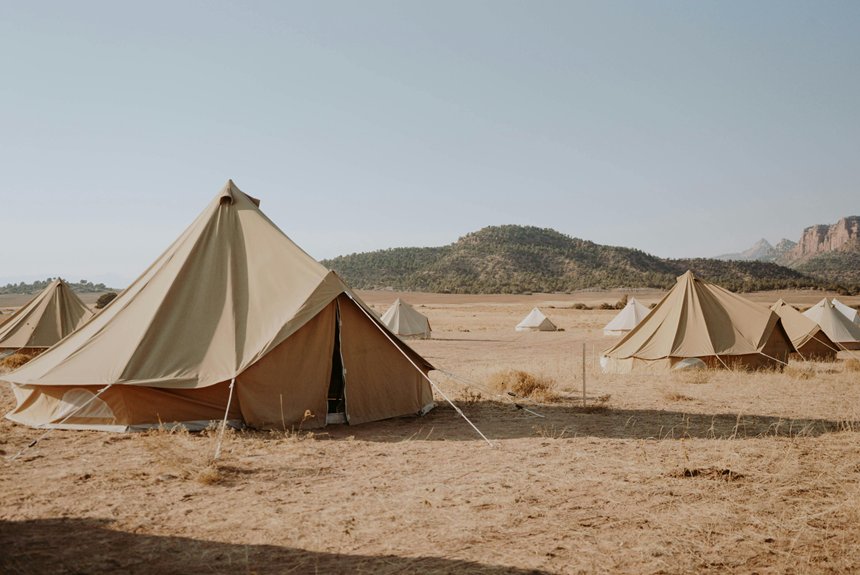
When winter camping, insulating your tent is essential for staying warm and comfortable. Start by choosing the right tent and focus on insulating the floor to prevent cold from creeping in. Don’t underestimate the power of tent liners and blankets to create a barrier against the chill. Plus, managing ventilation can help reduce moisture buildup. Interested in the best heating options to enhance your winter camping experience?
Choosing the Right Tent for Winter Conditions
When you’re gearing up for winter camping, choosing the right tent can make all the difference in keeping you warm and comfortable.
Look for a four-season tent, specifically designed to withstand harsh conditions. These tents typically feature stronger poles and a lower profile to resist wind. A good waterproof rainfly is essential, as winter storms can bring unexpected moisture.
Additionally, consider the tent’s insulation properties; double-walled tents have inner layers that trap heat better than single-walled options. Pay attention to ventilation as well; proper airflow reduces condensation, which can make your tent feel damp.
Finally, check the size—enough space for you and your gear will help maintain warmth. Choose wisely, and your winter camping experience will be much more enjoyable.
Insulating the Tent Floor
Even with the right tent, the ground beneath you can still sap your warmth during winter camping. To insulate the tent floor, start by laying down a thick foam pad or sleeping mat. This creates a barrier against the cold, providing both comfort and insulation.
If you don’t have a pad, consider using layers of heavy blankets or even an old sleeping bag as a makeshift insulator. You can also gather leaves, pine needles, or dry grass to create a natural insulation layer.
Make sure to clear the area of debris to enhance your comfort. Finally, check for any gaps or holes that could let cold air in. By taking these steps, you’ll keep the chill at bay and enjoy a cozier winter camping experience.
Using Tent Liners and Blankets
Tent liners and blankets can greatly enhance your winter camping experience by providing an extra layer of insulation. You’ll want to start by adding a thermal tent liner, which can trap warm air and reduce heat loss. Make sure it fits snugly against the walls and ceiling of your tent.
Next, consider using insulated blankets or sleeping bags. Drape them over your sleeping area for added warmth, or hang them from the tent’s interior to create a cozy barrier against the cold.
You can also layer these blankets beneath your sleeping pad for extra cushioning and insulation from the ground. By incorporating these simple additions, you’ll create a warmer, more comfortable environment that allows you to fully enjoy your winter adventure.
Managing Ventilation and Airflow
While keeping warm is essential during winter camping, managing ventilation and airflow is equally important to prevent condensation and maintain a comfortable environment.
Make sure to open vents and windows slightly, even in cold weather, to allow fresh air in while letting moisture escape. Position your tent in a way that takes advantage of natural wind direction, keeping airflow steady.
If you’re cooking inside, do it near an opening to help disperse excess humidity. A small battery-operated fan can also assist in circulating air without creating a draft.
Utilizing Heating Options Safely
When you’re braving the cold during winter camping, utilizing heating options safely can make all the difference in your comfort level.
First, consider portable propane heaters, but make certain they’re specifically designed for tents and have safety features like automatic shut-off. Always keep them at least three feet away from flammable materials.
If you opt for electric heaters, use a heavy-duty extension cord and avoid overloading circuits.
Don’t forget about proper ventilation; even the safest heaters produce carbon dioxide, so crack a vent.
For a more natural approach, hot water bottles or heated blankets can add warmth without the risks associated with fuels.
Your safety is paramount, so always prioritize these precautions while enjoying your winter adventure.