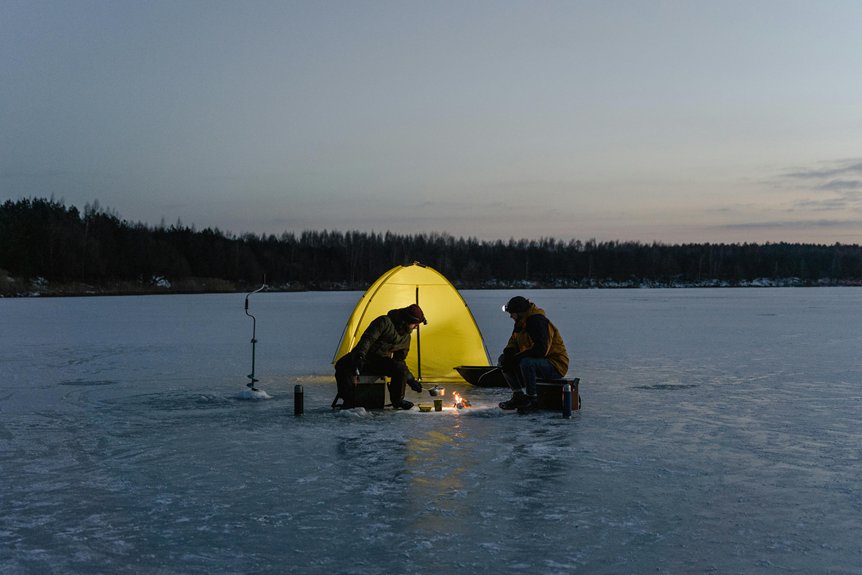
You might think winter camping is too cold and uncomfortable, but with the right insulation techniques, you can create a warm and inviting shelter. Whether you’re an experienced camper or a novice, transforming your tent into a cozy haven is easier than you think. From selecting the right tent to sealing drafts, there are several practical steps you can take to guarantee a comfortable experience. Discover how to make your winter camping trip enjoyable and snug.
Choose the Right Tent for Winter Camping
When you’re gearing up for winter camping, selecting the right tent is essential for staying warm and comfortable. Look for a four-season tent, designed to withstand harsh winter conditions.
These tents typically feature stronger fabrics and reinforced seams, ensuring durability against wind and snow. A low-profile design helps minimize wind resistance, while a well-ventilated structure prevents condensation inside.
Pay attention to the size; a snug fit retains heat better than a spacious one. Consider a tent with a snow skirt, which helps keep snow from entering.
Finally, check for good insulation properties and a sturdy frame to handle heavy snowfall. Choosing the right tent sets the foundation for a successful winter camping experience.
Use a Ground Insulation Layer
A solid ground insulation layer is essential for keeping the cold from seeping into your tent during winter camping.
Start by laying down a thick foam pad or an insulated sleeping pad, as these materials provide excellent thermal resistance. If you want extra cushioning, consider adding a layer of emergency space blankets or reflective foil under your sleeping pad.
You could also use a tarp or a groundsheet to protect against moisture and cold from the ground. Make sure to tuck the edges under your tent to prevent drafts.
Finally, avoid placing your sleeping gear directly on cold ground, as this can greatly decrease your comfort level.
With the right ground insulation, you’ll create a cozy retreat amid the winter chill.
Install an Inner Tent or Liner
After setting up a solid ground insulation layer, consider enhancing your tent’s warmth by installing an inner tent or liner. This extra layer provides significant insulation by trapping heat and creating a barrier against cold air.
Choose a lightweight, breathable material to prevent moisture buildup inside. When installing, make certain the liner fits snugly against the tent walls, leaving no gaps for cold air to seep through.
You can also add insulation panels between the inner liner and the outer tent for even more warmth.
Don’t forget to secure everything properly, so it remains taut and effective throughout your camping trip. With this simple addition, you’ll create a cozier, more comfortable camping experience, even in the coldest winter conditions.
Seal Any Drafts and Gaps
To keep the cold at bay, you need to seal any drafts and gaps in your tent effectively. Start by inspecting the tent’s seams and zippers for any areas where cold air might sneak in. Use waterproof tape or sealant to patch up these spots, ensuring a tight closure.
Don’t forget to check the floor; even small holes can let in chilly drafts. If your tent has a rainfly, make sure it’s properly secured and taut, as loose flaps can create gaps.
You might also consider using foam pads or blankets to fill larger spaces or gaps between the tent and the ground. By taking these steps, you’ll create a snug environment that keeps winter’s chill outside where it belongs.
Utilize Reflective Materials
Once you’ve sealed those drafts and gaps, consider adding reflective materials to enhance your tent’s insulation.
Reflective insulation, like emergency space blankets or mylar sheets, works wonders by reflecting your body heat back into the tent. Simply hang these materials on the interior walls or drape them over the roof. You can also place them on the ground beneath your sleeping area to reduce heat loss.
If you have a little extra space, create a double-layer setup by placing reflective material between two layers of fabric. This method traps air, boosting insulation effectiveness.
Add Insulating Blankets or Sleeping Pads
When you’re braving the cold in a winter tent, adding insulating blankets or sleeping pads can make a significant difference in your comfort level.
Start by laying down a high-quality sleeping pad to create a barrier between you and the cold ground. This won’t only provide cushioning but also help retain your body heat.
Next, bring along some insulating blankets. You can drape them over your sleeping area or wrap yourself up for extra warmth. Look for materials like fleece or wool, which offer excellent insulation.
Don’t forget to tuck the blankets securely to prevent drafts. By layering these elements, you’ll transform your tent into a cozy haven, making your winter camping experience much more enjoyable.
Incorporate a Tent Heater Safely
While staying warm is essential during winter camping, incorporating a tent heater requires careful consideration for safety.
First, choose a heater specifically designed for tents; these are typically safe and efficient. Always place the heater on a stable surface, away from flammable materials like sleeping bags and gear. Use a carbon monoxide detector to alert you of any dangerous fumes.
Keep the heater vented, ensuring it has adequate airflow to prevent buildup. Additionally, never leave it unattended while it’s running, and turn it off before you sleep. If possible, use it intermittently to maintain warmth without over-reliance.
Ventilation: Balancing Warmth and Fresh Air
Even with a reliable tent heater, maintaining proper ventilation is key to a comfortable winter camping experience. You need to balance warmth with fresh air to prevent condensation buildup and keep your tent breathable.
Start by slightly opening vents or windows, allowing for airflow without letting too much heat escape. If your tent has a rain fly, make sure it’s properly positioned to prevent drafts while still enabling air circulation.
Consider using a battery-operated fan to help distribute warm air evenly. When cooking inside, always ventilate to avoid carbon monoxide buildup.
Check the weather conditions regularly; during milder nights, you may want to keep ventilation open a bit more, while freezing temps might call for tighter seals.
Create a Cozy Camp Setup
Creating a cozy camp setup can transform your winter camping experience from chilly to charming. Start by laying down an insulated ground pad to keep the cold from seeping up.
Choose a warm sleeping bag rated for winter temperatures, and don’t forget to layer your clothing. Add a few extra blankets for that homey touch.
Incorporate soft lighting, like fairy lights or a lantern, to create a warm ambiance. A portable heater can also make a big difference, but make sure you prioritize safety by maintaining ventilation.
Finally, set up a small table with your favorite hot beverages and snacks; it’ll bring comfort and encourage relaxation. With these simple adjustments, you’ll create a cozy haven in the heart of winter.