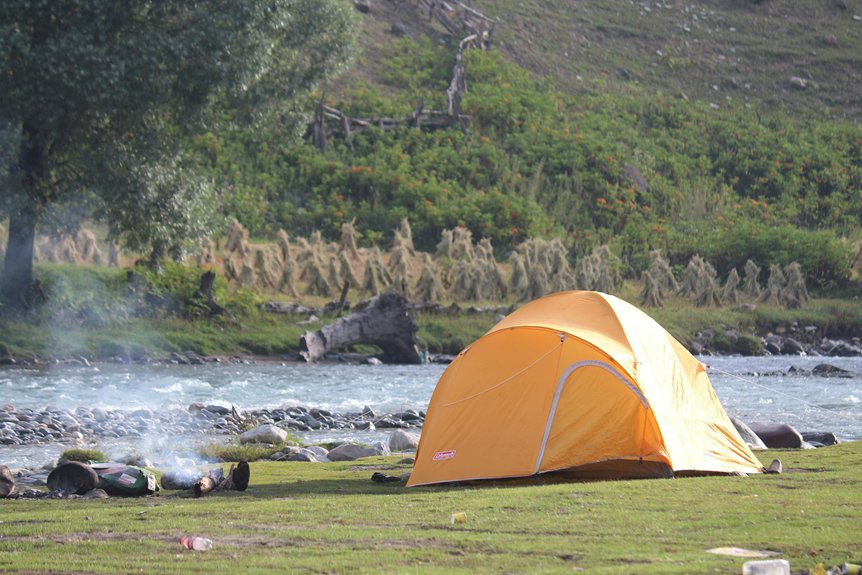
After a weekend camping trip, you might find your tent covered in mud and pine needles, leaving you wondering if you can just toss it in the washing machine. While machine washing offers a quick solution, it comes with risks that could damage your tent’s fabric and waterproof coating. So, how do you balance convenience and care? Let’s explore the pros and cons before you make a decision that could affect your gear’s longevity.
The Case For Machine Washing Tents
When you’re faced with stubborn dirt and grime on your camping gear, you might wonder if tossing your tent in the washing machine is a good idea.
In many cases, it can be a practical solution. Machine washing helps save time and effort, especially if you’ve got a large tent covered in mud or dust.
With the right settings, you can effectively remove dirt without damaging the fabric. Just make sure to use a gentle cycle and cold water, and avoid harsh detergents.
This method also helps you maintain the waterproof coating, as long as you follow up with a proper reapplication afterward.
The Risks of Using a Washing Machine
Although machine washing a tent can be convenient, it also comes with notable risks that you should consider.
First, the spinning cycle can damage the tent’s fabric and seams, potentially leading to tears or leaks.
Second, harsh detergents may strip away the waterproof coating, leaving your tent vulnerable to the elements.
Additionally, the size of your tent mightn’t fit well in the machine, causing uneven washing or excessive wear.
You also risk tangling poles and lines in the drum, which can lead to further damage.
Finally, improper drying can promote mold growth if moisture lingers.
Weigh these risks carefully before deciding on machine washing—your tent’s longevity may depend on it!
Alternative Cleaning Methods for Tents
If you’re looking to clean your tent without risking damage, several alternative methods can help maintain its integrity.
First, set up your tent outdoors or in a spacious area. Use a soft brush or cloth to remove dirt and debris.
For stubborn stains, mix mild soap with water and gently scrub the affected areas. Rinse thoroughly with a hose to avoid soap residue.
If your tent has mold, a solution of vinegar and water can work wonders—just apply it, let it sit for a bit, and rinse off.
Finally, make certain your tent is completely dry before storing it to prevent mildew.
These methods are gentle yet effective, keeping your tent ready for your next adventure.
How to Properly Prepare Your Tent for Washing
Preparing your tent for washing is essential to guarantee it stays in great shape. Start by removing all accessories, like stakes and guylines, as these can damage both your tent and the washing machine.
Next, check for any tears or holes. If you find any, patch them up before washing to prevent further damage.
Shake off any loose dirt or debris and use a soft brush for stubborn spots. If your tent has a lot of mildew, consider treating those areas with a specialized cleaner before the wash.
Finally, make sure to read the care instructions on your tent’s label; different materials may require unique handling.
With these steps, you’re ready to give your tent a thorough wash.
Tips for Maintaining Your Tent’s Longevity
To guarantee your tent lasts for many camping adventures, it’s crucial to adopt some simple maintenance habits.
Always clean your tent after each trip; just shake off dirt and debris before storing it. Avoid prolonged exposure to sunlight, as UV rays can weaken fabric.
When packing, verify the tent is completely dry to prevent mold and mildew. Store it in a cool, dry place, ideally in a breathable bag, rather than a compressed stuff sack.
Regularly check for any small tears or damage and repair them promptly with a patch kit.
Finally, consider applying a waterproofing spray to maintain its resistance against rain.
Following these tips will help you enjoy your tent for years to come!
Making the Final Call: To Wash or Not to Wash?
When should you consider washing your tent in the washing machine? If your tent’s accumulated dirt, mildew, or odors are impacting its performance, it might be time.
However, check the manufacturer’s label first; some tents aren’t machine washable. If you notice small stains, spot cleaning with mild soap and water can often do the trick without the risk of damage.
Remember, frequent washing can wear down the waterproof coating, so weigh the necessity carefully. If you decide to go ahead, use a gentle cycle, cold water, and avoid fabric softeners.
Ultimately, the choice to wash should hinge on your tent’s condition, usage, and the manufacturer’s recommendations—making sure it remains your reliable shelter on future adventures.