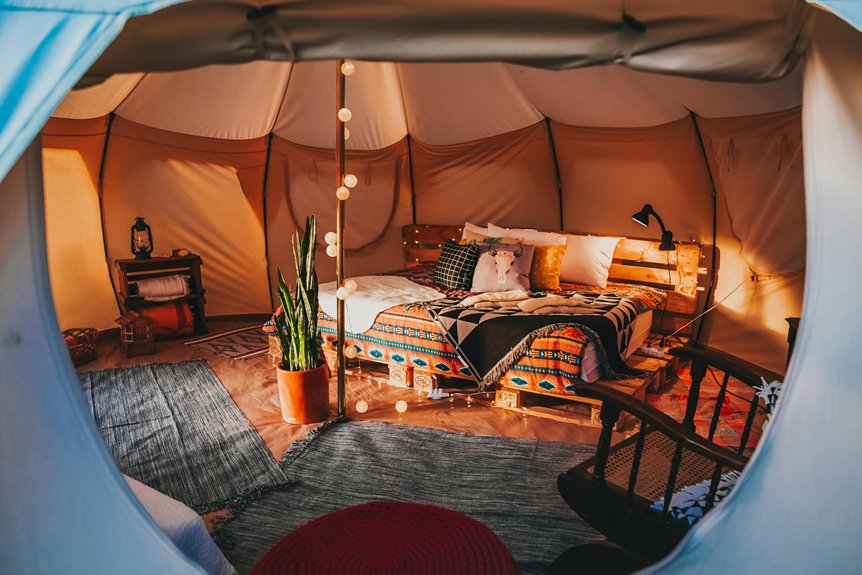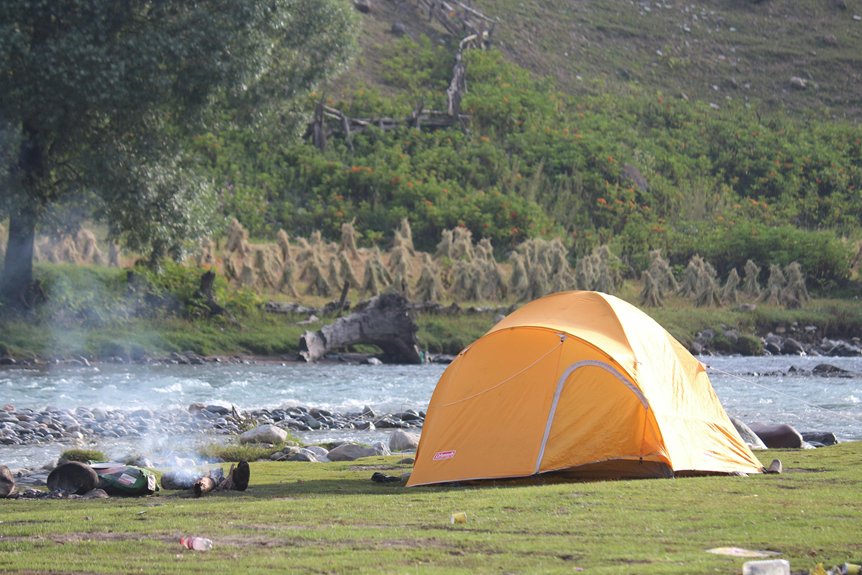
Imagine setting up your campsite as the sun dips below the horizon, casting a warm glow on your surroundings. Knowing how to say “tent” in Spanish, or “tienda de campaña,” can make your outdoor adventure in Spanish-speaking regions much smoother. But there’s more essential vocabulary that can enhance your experience. From gear to cooking terms, you’ll want to equip yourself with the right words to navigate the wilderness effectively. What’s next on your camping vocabulary list?
Understanding Basic Camping Terms
When you venture into the great outdoors, knowing basic camping terms in Spanish can enhance your experience and help you communicate effectively. Familiarizing yourself with essential vocabulary makes maneuvering your adventure smoother.
For instance, understanding the word “sendero” means “trail,” guiding you through nature’s paths. You’ll want to know “fogata” for “campfire,” as it’s vital for warmth and cooking. Don’t forget “mochila,” which means “backpack,” your trusty companion on hikes.
When you encounter “naturaleza,” you’ll appreciate the beauty around you, and recognizing “cielo” or “sky” can deepen your connection to the environment. Learning these terms not only enriches your camping experience but also connects you to Spanish-speaking communities in the great outdoors.
How to Say Tent in Spanish
Setting up your campsite isn’t complete without a tent, which in Spanish is “tienda de campaña.” Knowing this term can make it easier to ask for help or find the right supplies at a store.
Imagine walking into a local shop and confidently asking for a “tienda de campaña.” It opens up new opportunities to engage with locals and discover the best camping gear. You might even find recommendations for ideal campsites nearby!
When you’re out in nature, the right tent can make a huge difference in your comfort and enjoyment. So, remember that “tienda de campaña” as you prepare for your adventures.
Embrace the experience of camping in a new language, and it’ll surely enhance your journey!
Essential Camping Gear Vocabulary
Camping gear is the backbone of any successful outdoor adventure, and knowing the right vocabulary in Spanish can make your experience even smoother.
Start with “saco de dormir” for sleeping bag and “linterna” for flashlight. When you need to cook, remember “estufa” for stove and “ollas” for pots.
A “mochila” is your trusty backpack to carry everything, while “botiquín” refers to a first aid kit, essential for safety. Don’t forget “cuchillo” for knife and “cuerda” for rope, both crucial tools.
Finally, “hamaca” is perfect for relaxation after a long day. By mastering these terms, you’ll navigate your camping trip with ease, making your outdoor experience truly enjoyable and enjoyable.
Happy camping!
Setting Up Camp: Key Phrases
After gathering your gear, it’s time to focus on the next phase of your adventure: setting up camp.
Start by finding a flat, dry area—“Necesito un lugar plano y seco.”
Next, when you’re ready to pitch your tent, you’ll say, “Voy a montar la tienda.”
If you need help, don’t hesitate to ask, “¿Puedes ayudarme?”
As you set up, remember to secure your tent with stakes—“Clava las estacas.”
Once the tent’s up, make sure to check for any leaks by saying, “Revisa si hay filtraciones.”
Finally, as the sun sets, you might want to relax and say, “Es hora de descansar.”
Mastering these phrases will make your camping experience enjoyable and stress-free!
Cooking and Food Vocabulary for Campers
When hunger strikes during your outdoor adventure, knowing the right vocabulary can transform your cooking experience.
Start with “comida” for food and “cocinar” for cooking. You’ll need “olla” for pot and “sartén” for frying pan.
Don’t forget “fuego” for fire and “parrilla” for grill, essential for outdoor meals.
If you’re grilling meat, “carne” is your go-to word, while “verduras” refers to vegetables.
When it comes to snacks, use “snacks” or “botanas” to describe your munchies.
Need to season your meal? “Sal” means salt and “pimienta” means pepper.
Finally, remember to ask for “agua” when you need water.
With this vocabulary, you’ll whip up delicious meals and savor every moment under the stars!
Safety Terms Every Camper Should Know
Safety is paramount during any outdoor adventure, and knowing the essential terms can keep you and your fellow campers secure.
First off, familiarize yourself with “peligro” (danger) to identify potential hazards. If you encounter an “emergencia” (emergency), understand how to communicate it quickly. Knowing “primeros auxilios” (first aid) can also prove invaluable; consider carrying a basic kit.
Always look out for “señales de advertencia” (warning signs) regarding wildlife or weather conditions. If you hear “auxilio” (help), be ready to assist someone in need.
Finally, learn the term “refugio” (shelter) to know where to find safety in adverse conditions. With these terms at your fingertips, you’ll feel more confident and prepared during your camping escapades.
Navigating the Outdoors: Directions and Maps
As you commence your outdoor adventure, mastering navigation skills becomes essential for a successful experience. Familiarize yourself with key terms like “norte” (north), “sur” (south), “este” (east), and “oeste” (west) to help you read maps effectively. A reliable compass will guide your way, but don’t forget to check your surroundings for natural landmarks.
When using a map, pay attention to symbols indicating trails, campsites, and water sources. Always orient the map in the direction you’re facing.
If you’re hiking in a Spanish-speaking area, phrases like “¿Dónde está el sendero?” (Where is the trail?) can be invaluable. With practice, you’ll confidently navigate your way and enjoy the beauty of the great outdoors.
Asking for Help: Useful Phrases
Ever found yourself in a situation where you need assistance while camping? Knowing how to ask for help in Spanish can make all the difference.
Start with simple phrases like, “¿Puede ayudarme?” (Can you help me?) or “¿Dónde está…?” (Where is…?). If you’re lost, saying “Estoy perdido/a” (I’m lost) lets others know you need guidance.
When facing a more serious issue, like needing medical aid, use “Necesito ayuda médica” (I need medical help). Don’t hesitate to point to what you need while asking, as visuals can bridge the language gap.
Local Wildlife and Nature Vocabulary
Exploring the great outdoors often means encountering a variety of local wildlife and nature. To enhance your experience, knowing some Spanish vocabulary can be incredibly helpful.
For instance, “el ciervo” refers to a deer, and “el zorro” means fox. If you spot a bird, you might say “el pájaro,” while “la mariposa” stands for butterfly.
Understanding plants is just as essential; “el árbol” means tree, and “la flor” refers to flower. When discussing nature, you can use “el paisaje” for landscape and “la montaña” for mountain.
These words will enrich your conversations with locals and deepen your appreciation for the environment. Embrace the beauty around you, and enjoy the adventure!