Did you know that nearly 60% of RV owners prefer dry camping for its freedom and connection to nature? This off-grid lifestyle allows you to escape the crowds and immerse yourself in the great outdoors. But to thrive in these remote spots, you’ll need to prepare properly and embrace a self-sufficient mindset. Curious about how to make the most of your dry camping adventure? Let’s explore the essentials you’ll need for your journey.
Understanding Dry Camping: The Basics
Dry camping, often referred to as boondocking, is an exhilarating way to immerse yourself in nature while minimizing your reliance on modern amenities.
You’ll find yourself parking your RV in remote locations, away from crowded campgrounds, where the stars light up the night sky. This unique experience allows you to connect with the great outdoors, whether it’s nestled in a quiet forest or alongside a serene lake.
You’ll need to be self-sufficient, so pack extra water, food, and supplies. Understanding your RV’s capacity to hold water and waste is vital.
Familiarize yourself with solar power options and portable generators to enhance your off-grid adventure. Embrace the freedom and spontaneity that comes with dry camping, and let the wild call you!
Benefits of Dry Camping in an RV
When you venture into the world of dry camping in an RV, you’ll discover a multitude of benefits that enhance your travel experience.
First off, you’ll enjoy the freedom of exploring remote locations, far from crowded campgrounds. This solitude allows you to fully immerse yourself in nature, whether it’s waking up to stunning mountain views or falling asleep under a canopy of stars.
You’ll also save money, as many off-grid spots are free or low-cost. Additionally, dry camping encourages a minimalist lifestyle, pushing you to pack lighter and appreciate the essentials.
Finally, the thrill of self-sufficiency can be exhilarating, as you learn to rely on your skills and resources.
Get ready for unforgettable adventures!
Essential Gear for Dry Camping
Before you hit the road for your dry camping adventure, making sure you’ve got the right gear is essential for a successful experience.
Start with a reliable power source, like solar panels or a generator, to keep your devices charged. A portable water filtration system is a must, ensuring you can drink safely from natural sources.
Don’t forget a sturdy camp stove for cooking tasty meals under the stars. A good quality cooler helps keep your perishables fresh.
Bring along a reliable first aid kit, flashlights, and extra batteries, just in case.
Finally, invest in comfortable sleeping gear, such as sleeping bags or air mattresses, to recharge after a day of exploration.
With the right gear, you’re set for unforgettable adventures!
Finding the Perfect Dry Camping Locations
How do you find the perfect spot for your dry camping adventure? Start by exploring online resources like Campendium or AllTrails, where fellow campers share hidden gems.
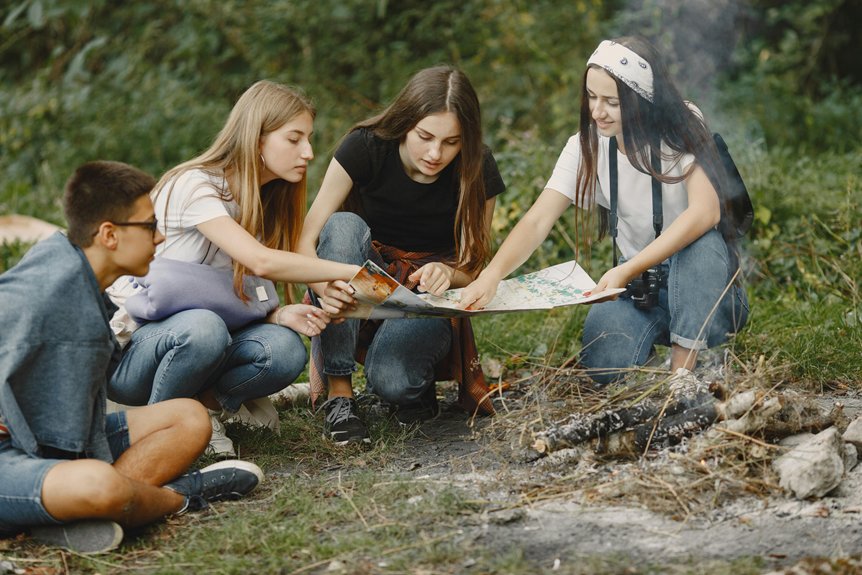
Don’t forget to check local regulations; some areas require permits or have restrictions. Next, consider your desired scenery—mountains, lakes, or forests—and use maps to pinpoint suitable locations.
Once you’ve narrowed it down, venture off the beaten path! Look for lesser-known spots that offer peace and solitude.
Remember to scout for accessibility, too; verify your RV can navigate the terrain. Finally, trust your instincts. If a location feels right, it probably is.
Embrace the thrill of discovery, and you’ll find a perfect dry camping haven that’s uniquely yours!
Preparing Your RV for Off-Grid Adventures
After you’ve discovered the perfect dry camping location, it’s time to gear up your RV for the off-grid adventure ahead.
Start by checking your power sources; verify your batteries are charged and consider solar panels to keep the energy flowing.
Stock up on non-perishable foods and easy-to-cook meals, so you’re ready for those cozy campfire nights.
Don’t forget to pack essential gear like a portable grill, cooking utensils, and a reliable first aid kit.
Make sure your RV’s tires are in good condition for rugged terrain, and confirm your vehicle’s fluids are topped off.
Finally, secure any loose items inside to avoid a chaotic ride.
With everything in place, you’re ready to embrace the wild!
Water and Waste Management Strategies
While you’re soaking in the beauty of nature, managing your water and waste effectively becomes essential for a successful dry camping experience.
Start by conserving water; use a two-gallon bucket for dishwashing and employ biodegradable soap. When showering, consider quick rinse-off techniques to limit usage.
Keep an eye on your tanks—empty the gray and black water tanks as needed to avoid overflow. Bring along portable waste tanks for added convenience.
For drinking water, stock up before your trip, or use a high-quality water filter when sourcing from lakes or streams.
Finally, always follow Leave No Trace principles—pack out what you pack in.
With these strategies, you’re set for an unforgettable off-grid adventure!
Powering Your RV Without Hookups
Once you’ve got your water and waste sorted, the next challenge is keeping your RV powered up without any hookups.
Embrace solar panels for a renewable energy source; they’re perfect for harnessing sunlight during your adventures. Pair them with a robust battery system to store energy for those cloudy days or nighttime needs.
Don’t forget about a generator for backup power—it’s a handy tool when your solar setup just can’t keep up. You might also consider portable power stations for extra juice on the go.
Finally, be mindful of your energy consumption; using LED lights and energy-efficient appliances can make a significant difference.
With a bit of planning, you’re ready to explore the great outdoors without missing a beat!
Safety Tips for Dry Camping
When you venture into the wild for dry camping, safety should always be top of mind, as unexpected situations can arise in remote locations.
First, familiarize yourself with the area; download maps and check cell service in advance. Keep a well-stocked first aid kit handy for minor injuries. Always inform someone of your itinerary and expected return.
Invest in a reliable water filtration system to guarantee you have clean drinking water.
When it comes to fire safety, use established fire rings and never leave a fire unattended.
Finally, be cautious of wildlife; store food securely and avoid attracting animals.
Connecting With Nature: Activities While Dry Camping
After ensuring your safety, it’s time to immerse yourself in the beauty of nature while dry camping.
Explore scenic hiking trails, where every step reveals breathtaking views and hidden wildlife. Grab your binoculars and set out on birdwatching adventures; you might spot a majestic eagle or a colorful warbler.
If you’re feeling more adventurous, try your hand at fishing in nearby rivers or lakes. Don’t forget to capture the stunning sunsets—set up your camera for that perfect shot!
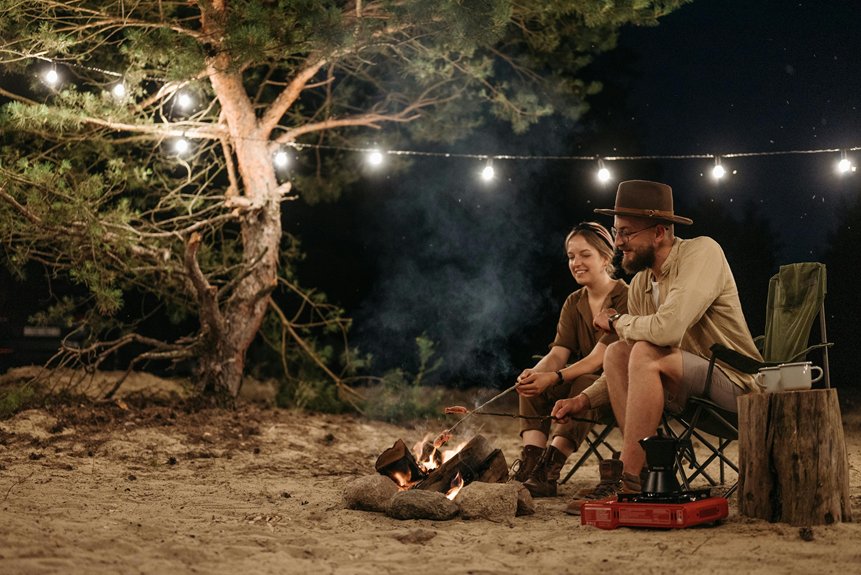
In the evenings, gather around a campfire, share stories, and gaze at the stars above.
Whether you’re meditating in tranquility or engaging in outdoor activities, you’ll find countless ways to connect with the natural world around you.
Embracing the Freedom of Off-Grid Living
Embracing the freedom of off-grid living means stepping into a world where the constraints of modern life fade away, allowing you to craft your own unique adventure.
Picture waking up to the sound of rustling leaves, with no alarms or deadlines to dictate your day. You can explore hidden trails, fish in serene lakes, or simply bask in the sun’s warmth.
Without the distractions of technology, you’ll reconnect with nature and discover the thrill of self-sufficiency. You’ll learn to manage resources, whether it’s conserving water or harnessing solar power.
The beauty of off-grid living lies in those spontaneous moments—like stargazing under a blanket of stars or sharing stories around a campfire.
Embrace this lifestyle, and let adventure guide you!