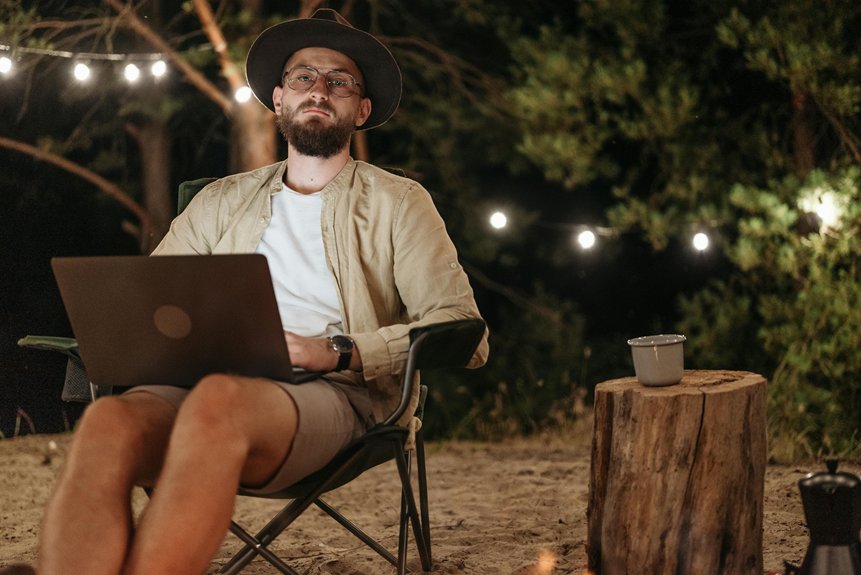
When you’re out camping in remote areas, staying connected can be a challenge. However, you have several options to access WiFi, whether it’s using your smartphone as a hotspot or investing in a portable WiFi device. Understanding these choices can make your outdoor experience more enjoyable and keep you linked to the outside world. Let’s explore the best strategies to guarantee you’re never too far from a connection.
Understanding Your Connectivity Options
When you head out into the great outdoors, staying connected mightn’t be the first thing on your mind, but it’s essential for many campers. Understanding your connectivity options can make a big difference in your camping experience.
First, consider cellular data; if you have a strong signal, you can access the internet directly from your smartphone. Wi-Fi hotspots are another option, often available at campgrounds or nearby cafes.
Portable Wi-Fi devices can also provide reliable internet access, allowing multiple devices to connect without burning through your phone’s data.
Finally, satellite internet is an option for those deep in the wilderness, though it can be pricier and slower.
Weigh these options based on your needs and location to stay connected.
Using Your Smartphone as a Hotspot
If you’re in an area with decent cellular coverage, using your smartphone as a hotspot can be a game-changer for staying connected while camping.
First, check your mobile plan to verify it allows hotspot usage. Then, go to your phone’s settings, find the “Hotspot” option, and enable it. Customize your network name and password for security.
Once activated, connect your laptop or tablet to your phone’s Wi-Fi network just like you’d with any other Wi-Fi connection.
Keep in mind that using your phone as a hotspot can drain its battery quickly, so bring a portable charger. Monitor your data usage to avoid overage fees, and enjoy the convenience of staying connected while immersed in nature!
Investing in a Portable WiFi Hotspot
Investing in a portable WiFi hotspot can greatly enhance your camping experience by providing reliable internet access no matter where you pitch your tent.
These devices allow you to connect multiple devices at once, making it easy to share the connection with friends or family. When choosing a hotspot, look for one with a strong battery life and good coverage in remote areas.
Many options come with flexible data plans, so you can choose what fits your needs best. Just remember to check the signal strength in your camping location beforehand.
With a portable hotspot, you can easily stay connected for navigation, entertainment, or sharing your adventures on social media, all while enjoying the great outdoors.
Exploring Satellite Internet Solutions
While camping in remote locations, staying connected can be a challenge, but exploring satellite internet solutions offers a reliable alternative.
Satellite internet provides coverage almost anywhere, making it perfect for your outdoor adventures. You’ll need a satellite dish and a service plan, but many companies offer portable options that are easy to set up.
When choosing a provider, consider factors like speed, data limits, and cost. Some popular options include HughesNet and Viasat, both known for their extensive coverage.
Keep in mind, though, that latency can be higher than traditional broadband, which might affect activities like video streaming.
Finding Campgrounds With Wifi Access
Wondering where to find campgrounds with WiFi access? Start by checking online resources like campground directories, review sites, or apps that list amenities.
Many established campgrounds, especially those in popular areas, offer WiFi to attract visitors. Look for keywords like “WiFi,” “internet,” or “connectivity” in descriptions.
Don’t forget to read reviews; they often provide insights into the quality and reliability of the WiFi service. You can also call the campground directly to ask about their internet options.
If you’re in a national park, some parks have designated areas with WiFi.
Finally, consider joining camping forums or social media groups where fellow campers share their experiences and recommendations on WiFi-friendly spots.
Happy camping!
Tips for Improving Signal Strength in Remote Areas
To guarantee you get the best possible WiFi signal while camping in remote areas, start by positioning your device strategically. Place it near windows or high ground, as signals travel better when unobstructed.
If you’re using a mobile hotspot, keep it elevated and away from metal objects that could interfere.
Next, consider investing in a WiFi booster or antenna; these can greatly enhance your signal strength. Avoid using your device in areas with thick foliage or dense structures, as they can block signals.
Lastly, limit the number of devices connected to your network; fewer connections can improve speed and stability.