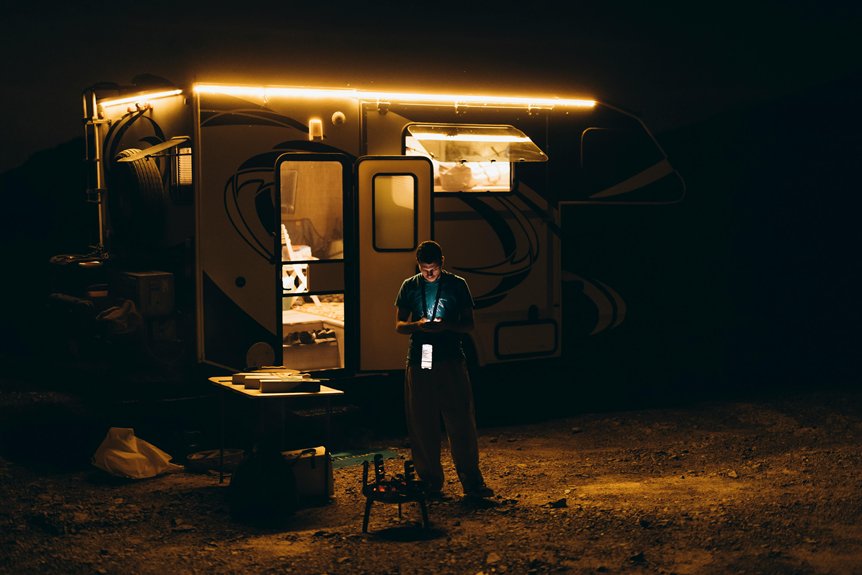
If you’re looking for a unique camping experience, building your own truck tent could be the perfect project. It’s not just about saving money; it’s about creating a custom solution tailored to your needs. With the right materials and a solid plan, you can design a tent that fits your truck perfectly. Let’s explore how to gather your supplies and map out your design for a functional and enjoyable outdoor setup.
Gathering Materials and Tools
Before you plunge into making your truck tent, it’s essential to gather the right materials and tools to guarantee a smooth process.
Start with a durable tarp or high-quality canvas as your main fabric; these will withstand the elements. Next, grab sturdy poles—fiberglass or aluminum work great for support.
You’ll also need heavy-duty stakes and guylines for stability. Don’t forget a sewing kit or fabric adhesive for assembly. A measuring tape and scissors are vital for precise cuts.
Finally, consider a portable camping mattress for comfort. With these essentials in hand, you’re well on your way to creating a reliable and functional truck tent.
Get ready to enjoy the great outdoors, knowing you’ve got what you need!
Designing Your Truck Tent
Now that you have your materials and tools ready, it’s time to focus on designing your truck tent.
Start by measuring the dimensions of your truck bed, as this will determine the tent’s size. Sketch a layout that includes a fitted base, side walls, and a top cover, ensuring it fits snugly against your truck.
Consider adding windows for ventilation and pockets for storage. Choose a design that allows for easy setup and takedown; you might want to incorporate poles or a lightweight frame for support.
Think about weather resistance too—select fabrics that can withstand wind and rain.
With a clear design in mind, you’ll be well-prepared to move on to cutting and preparing the fabric.
Cutting and Preparing the Fabric
Start by laying out your fabric on a flat, clean surface to make the cutting process easier. Measure and mark the dimensions based on your design, ensuring you account for seams and hems.
Use a fabric marker or chalk to create clear lines that guide your cuts. Grab sharp fabric scissors or a rotary cutter for a clean edge—precision is key.
If you’re using multiple pieces, stack them neatly and cut through all layers simultaneously to save time. Once you’ve finished cutting, inspect each piece for any frayed edges or imperfections.
You can reinforce these areas with a zigzag stitch if needed. By preparing your fabric carefully, you set the stage for a successful truck tent assembly.
Assembling the Frame
Assemble the frame of your truck tent with care, as it serves as the backbone for your entire setup.
Start by laying out your pre-cut poles on a flat surface. Use high-quality connectors or brackets to join the poles securely, ensuring they’re sturdy enough to withstand winds and shifts.
Follow your measurements precisely; the frame should fit snugly within your truck bed. Consider adding cross-bracing for extra stability, especially if you’re camping in windy conditions.
Use a level to check that your frame is even, making adjustments as necessary. Once you’re satisfied with the structure, tighten all connections, ensuring they won’t loosen during your trip.
A solid frame will provide the support you need for a successful camping experience.
Attaching the Tent to Your Truck
Once you’ve secured the frame, it’s time to attach the tent to your truck, ensuring a snug fit that keeps out elements and provides comfort.
Start by aligning the tent’s base with the truck bed, making sure it sits evenly across the frame. Use bungee cords or straps to secure the tent to the frame, providing tension without overstretching the fabric.
Make sure to check all corners and edges for any gaps that could let in moisture or wind. Once secured, adjust the tent’s height to create a taut surface, preventing sagging.
Finally, step back and inspect the overall fit, making any necessary adjustments to guarantee everything is stable and ready for your next adventure.
Final Touches and Setup Tips
Before you settle in for the night, take a moment to confirm your truck tent is fully prepared for a comfortable camping experience.
Start by checking the weather forecast and adjust your setup accordingly—if rain’s on the horizon, make sure your fly is securely in place.
Next, lay down a ground tarp inside to protect against moisture and debris. Use sleeping pads or an air mattress for added comfort.
Don’t forget to tuck in any loose edges of the tent fabric to prevent drafts. Set up your gear efficiently, keeping essentials within reach.
Finally, consider adding a battery-operated lantern for light and a portable charger for your devices.
With these final touches, you’re all set for a cozy night under the stars.
Frequently Asked Questions
What Type of Truck Is Best for a Homemade Tent?
When considering a truck for a homemade tent, look for a model with a flat, long bed and sturdy sides. Pickup trucks like the Ford F-150 or Chevrolet Silverado often provide the best support and space.
How Do I Waterproof My Truck Tent?
To waterproof your truck tent, apply a quality waterproofing spray on the fabric, focusing on seams. You can also use a tarp underneath for extra protection. Regularly check for wear and reapply as needed.
Can I Make a Truck Tent for a Camper Shell?
Yes, you can definitely make a truck tent for a camper shell! Start by measuring your shell’s dimensions, then choose durable materials to guarantee stability and weather resistance. Follow a simple design to maximize comfort and functionality.
What Is the Best Fabric Choice for Durability?
For durability, you’ll want to choose ripstop nylon or polyester. These fabrics resist tearing and weather well, ensuring your setup withstands the elements. Don’t forget to check for waterproof coatings to enhance longevity and protection.
How Can I Secure My Tent in Windy Conditions?
To secure your tent in windy conditions, stake it down firmly, use guy lines for added stability, and consider adding extra weight, like sandbags, to the base. This’ll help keep your tent grounded and secure.